
Shortness of breath and a chronic cough are symptoms of the common lung disease, chronic obstructive pulmonary disease – known as COPD. Specialist in Respiratory Medicine DR RAYMOND TSO shares his insights on medical developments around the condition.

What is COPD?
As the name suggests, Chronic Obstructive Pulmonary Disease relates to having some kind of obstruction in the lung. More specifically, the disease comes about from the bronchioles constricting and causing an obstructive airflow into the lungs.
It sounds similar to asthma – is it the same?
They are different things. However, if you have prolonged asthma, it can turn into COPD.
A lot of people are very familiar with asthma, perhaps because they had it as a kid or knew someone who did, or maybe their own children have it. Chronic obstructive pulmonary disease, however, is a generalised term for a broader spectrum of illnesses. Under this umbrella are chronic bronchitis and emphysema, for example, along with other diseases that cause obstructions of the bronchioles.
One of these conditions that’s relatively common in Hong Kong is bronchiectasis, which is not a genetic disease but can be influenced by genetic factors in some people. It occurs when the airways become permanently widened and mucus builds up inside them, making infections more likely and restricting airflow.
How common is COPD in Hong Kong?
It’s quite common. Around 9 to 12 percent of the Hong Kong population suffers from COPD; globally, it’s around 10 percent. So, our statistics are similar to the worldwide picture. It’s the fifth leading cause of death in Hong Kong, which is also on par with regional and global levels.
How do people get chronic obstructive pulmonary disease?
Smoking is the most common related cause – it’s a huge factor. Exposure to air pollution can be another cause. I recently had a young patient who is a teacher at an international school, and after the school went through a very nice renovation, he began to feel short of breath when he was at work. Because of the various chemicals and fumes released from things like new furniture and carpet, he developed what’s known as occupational asthma, and then COPD. When he’s away from the school on holidays, he’s fine; as soon as he gets back into the classroom, he finds he has breathing issues again.
It’s quite common for people to get COPD from exposure to chemicals and detergents. These initially cause airway hypersensitivity; after a longer period of time, it can lead to chronic obstructions.
Fewer people in Hong Kong smoke cigarettes these days, but is vaping a new danger?
Smoking rates have been improving – bans have helped a lot. But now more people – young people, in particular – are picking up vaping. And I think it’s more dangerous than smoking, in a sense, because we don’t have an established history of the long-term consequences like we do with smoking. So, people are inhaling these strawberry-flavoured and other fruit-flavoured vapes, without really knowing about the additives, or what chemicals are used in the different fragrances. While vaping doesn’t provide the burning sensation of cigarettes, you are still putting heated chemicals into your lungs; there’s nothing good coming out of it that I can see.
Vaping actually started as a smoking cessation tool, or was marketed that way. But data shows that it encourages people to smoke rather than getting them off it. It’s convenient, for one thing – a simple tube you put in your mouth – and it’s somehow seen as more socially acceptable, probably because it smells less pungent. But there are now very bad reports of vaping-related illnesses emerging, in the US especially, of people having acute reactions to vaping and going to ICU and needing lung transplants.
What are some of the COPD symptoms?
COPD symptoms include chronic cough and shortness of breath; a lot of people suffer from chest tightness, wheezing, increased sputum production, and a feeling of being tired all the time.
Tell us about the current treatment.
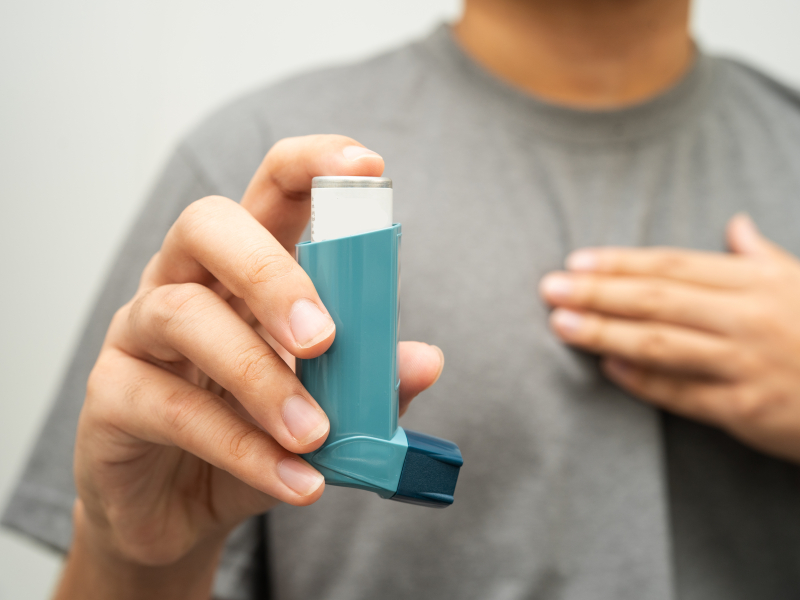
There are three different groups of medications available to treat COPD: bronchial dilators, inhaled corticosteroids, and a newer generation of biologics which are proving helpful for patients. (Biologics are medications derived from living organisms rather than synthetic chemicals.)
The first step in treatment if a person is a smoker is to ensure that they quit smoking to avoid further damage. We then help them to clear their sputum by using bronchial dilators – short-acting dilators in the first instance, and then long-acting dilators to stabilise them.
In subgroups of COPD patients who have a high allergic component (or, as we say, high eosinophils levels), we find the use of biologics is generally beneficial. In particular, they can be used to taper patients off corticosteroids. The prolonged use of oral steroids can lead to a range of side effects, from osteoporosis to diabetes, so we try to reduce the doses of these. Biologics can help us to do that, which can in turn reduce a patient’s exacerbations (that is, flareups or bad episodes of the disease) and reduce their hospitalisations. When a COPD patient is hospitalised with lowered lung function, it takes them a long time to climb back up to their baseline lung function. So, we try to prevent them from going to hospital in the first place, including by using these newer-generation medications.
What’s the prognosis with these treatments?
It depends on a patient’s baseline lung functions, their number of exacerbations, and how compliant they are. First and foremost, though, if they smoke, they should quit. Then, depending on the extent of the disease, we can treat them with medications or injections, and they can undergo pulmonary rehabilitation to help them regain lung capacity and teach them how to breathe properly. There’s actually a whole multidisciplinary approach to COPD – including things like having physio show patients how to cough up sputum and clear their airways.
I do think the newer treatments I’ve mentioned can give hope to patients. A lot of COPD sufferers have had the disease for a long time; some try to ignore it; others just get treated the same way for many years, and their rate of exacerbation stays the same. Now, though, there is this new modality they can explore; so, it’s a good time for them to revisit their doctor and discuss if there’s something else they can try, or whether they’re the right candidate for one kind of treatment or another. Even with inhalers, we now use something called triple therapy, which is using double bronchial dilators with corticosteroids; yet some older patients remain on the double treatment and not the triple, so they haven’t really maximised their medications.
Quitting smoking aside, what are some of the things we can do to prevent COPD?
Well, exercise is always a good one. One reason for this is because COPD can cause associated heart disease. The heart and lungs go hand in hand; you need healthy lung function to exercise, but if you have COPD, you’re less able to do it. This means your heart can weaken, your general physique and health will get worse, and then you can get into a cycle of infections, sputum and pneumonia.
What do you like about your medical speciality?
I enjoy seeing patients and stabilising their condition to ensure that they don’t have to go back into hospital. I was trained in ICU, but your adrenaline is always high and it’s very stressful. I like respiratory care because you can follow a person’s process, manage their health, maintain them through a disease and then start to see them feeling better.
According to the Tobacco and Alcohol Control Office (TACO) of Hong Kong’s Department of Health (taco.gov.hk/t/english/infostation/infostation_sta_01), smoking prevalence in HK has dropped significantly in the past 40 years – from 23.3 percent of daily cigarette smokers in 1982 to 9.1 percent in 2023. This has been brought about through measures including taxation, education and bans on smoking in public places.
This article on COPD first appeared in Expat Living magazine in Hong Kong. You can buy the latest issue or an annual subscription or read the digital version free now.