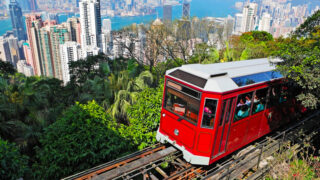
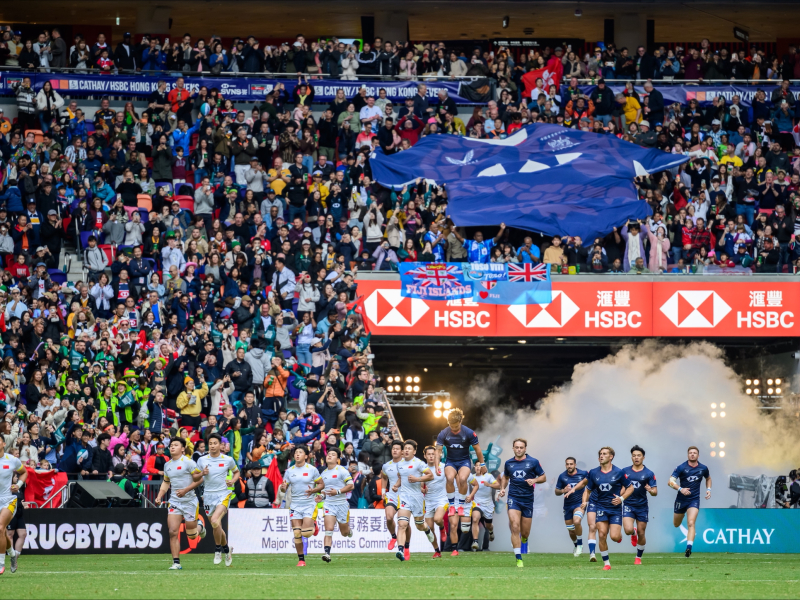
For many, it’s a rite of passage: taking your place in a stand at the Hong Kong Sevens, surrounded by the noisy revelry of costumed fans as world-class rugby action unfolds on the field.
While the origins of seven-a-side rugby can be traced back to Scotland in the 1880s, few would argue that the birthplace of the modern incarnation of the sport is Hong Kong. The Cathay/HSBC Hong Kong Sevens tournament started from humble beginnings in 1976, but today it attracts over 40,000 visitors a day and is considered by many as the jewel in the crown of World Rugby’s HSBC SVNS Series.

This year, the three-day event celebrates its 50th birthday, so you can expect the atmosphere to be even more festive, as international and local players and fans flock to Kai Tak Stadium in April.
Here, we take a look back at the past half a century to see what has made the tournament so special.
1976-2026: Hong Kong Sevens Milestones
1976
The first Hong Kong Sevens is held, with 12 teams hosted at the Hong Kong Football Club in a single-day tournament on 28 March. Hong Kong wins the Plate.
“It was the most colourful day of sport that I have ever seen – one that put Hong Kong on the international sporting map.” – ADC “Tokkie” Smith, Sevens co-creator
1978
The tournament expands to 16 teams, and the Guinness Book of World Records certifies Hong Kong Sevens as the world’s largest international rugby tournament.
1980
The Leslie Williams Award for Best & Fairest player of the Sevens is introduced, with Sab Doiwa from Papua New Guinea chosen as the inaugural winner. Greats of the rugby world who would go on to win the award include Jonah Lomu, David Campese, Christian Cullen, Mark Ella, John Maxwell and Glen Osborne.
1981
Event dates for the Sevens get fixed for the final weekend in March each year, and the tournament grows from 16 to 20 teams. Attendance outpaces capacity for first time in history.
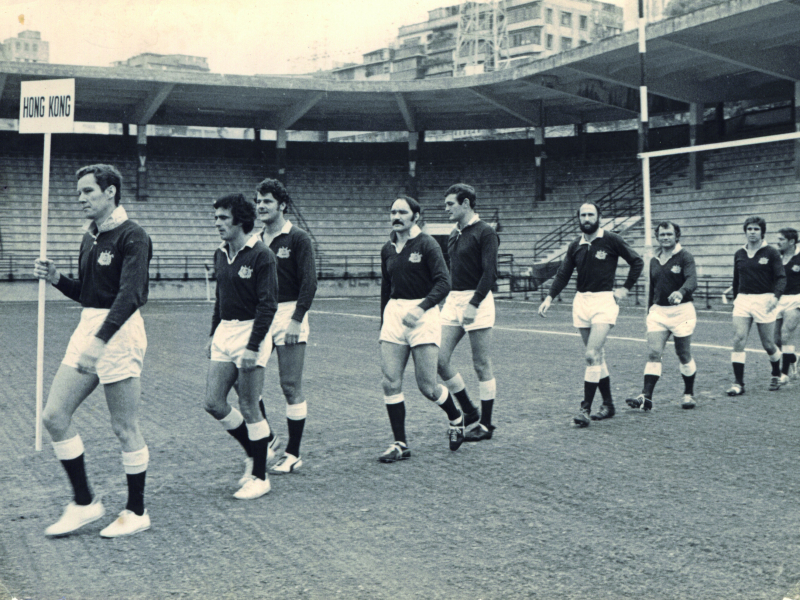
1982
The tournament moves to the old Government Stadium in So Kon Po.
1983
Australia’s David Campese makes his Hong Kong Sevens debut, the first of 12 appearances in Hong Kong.
1984
The Sevens grows to 24 teams, and a Bowl competition is introduced.
1985
The 10th anniversary of the Sevens sees a record crowd of 23,000 attend. Hong Kong wins the Bowl, its second silverware since the tournament’s inception in 1976.
1986
New Zealand wins the Hong Kong Sevens for the first time as a national representative side.
1988
Eric Rush makes the first of his 10 appearances for New Zealand at the Sevens.
1989
Fiji’s Waisale Serevi debuts in Hong Kong, winning the Leslie Williams Award. Serevi and Eric Rush will become the predominant faces of the Sevens for the next decade.
1990
Fiji scores what has widely been acknowledged as the best try in Sevens history, featuring an overhead pass from Noa Nadruku to Serevi who then shovelled the ball between his legs to a waiting Tomasi Cama to seal a memorable victory for Fiji.
1991
Sevens tickets sell out an unprecedented month before the tournament; the Hong Kong Rugby Football Union responds with a policy that guarantees tickets for all local rugby players, and plans are set in place to expand the capacity of the Government Stadium.
1992
Hong Kong captures its third Plate, beating Tonga 12-8 in extra-time in the final – a poignant moment, as HK had been omitted in favour of Tonga from the 20 automatically qualified teams for the first ever Rugby World Cup Sevens to be held the following year.
1993
The first Sevens is held in the new Hong Kong Stadium, albeit in an incomplete building – fans are given cushions because there are no seats on one side of the stadium. Fortunately, the weather gods smile on the event and conditions remain good.
Western Samoa wins their first ever Cup, becoming the fourth nation to do so after Australia, Fiji and New Zealand.
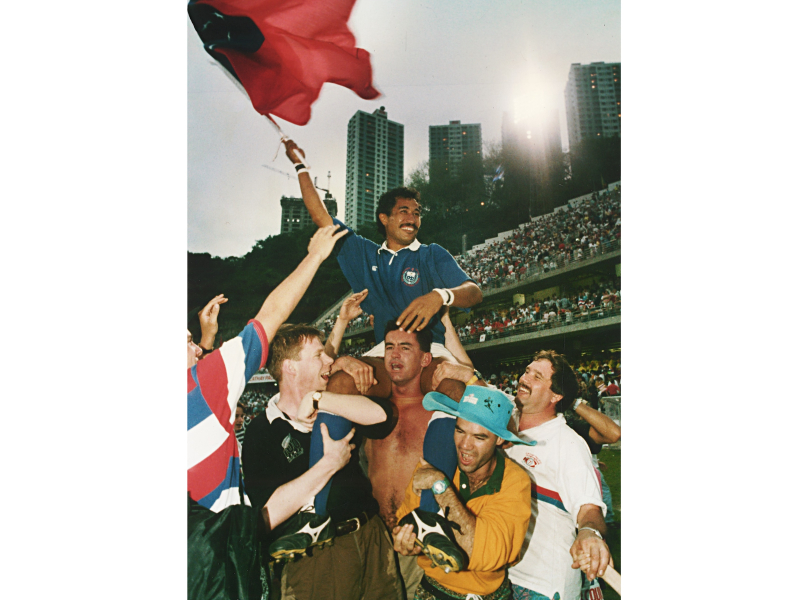
1994
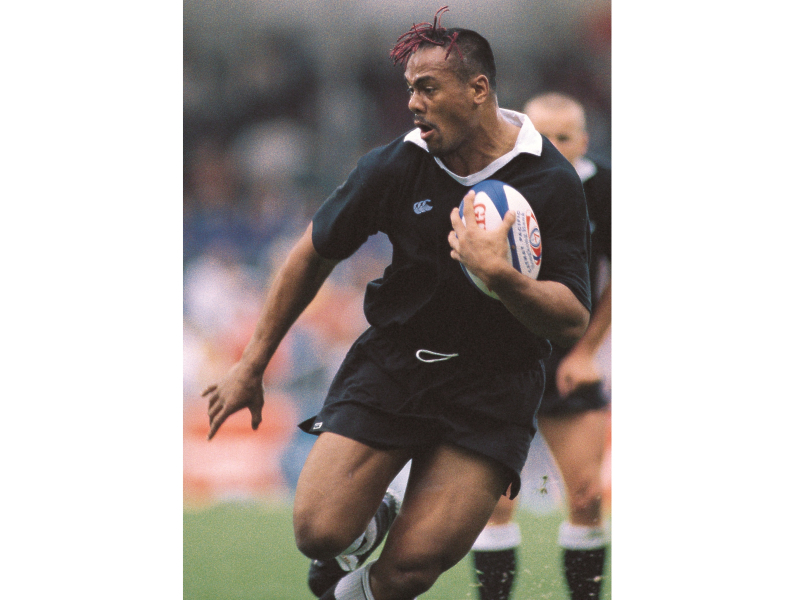
New Zealand unveils a new weapon in Jonah Lomu. An unheralded 18-yearold on arrival, Lomu leaves as a star, particularly after steamrolling Waisale Serevi for two tries in the semi-final and flat-footing David Campese for a try in the final. Lomu followed Serevi’s footsteps by winning the Leslie Williams Award on his debut. Before the year was out, Lomu would become the youngest ever New Zealand All Black at the time.
1995
England marks its first official national team debut at the Hong Kong Sevens, but the tournament is again won by New Zealand, with the emergence of another young superstar in Christian Cullen.
1996
Cullen scores a tournament total of 18 tries and 143 points and sweeps the Leslie Williams Award, assuring that his entry into the New Zealand All Blacks later in the year is a mere formality.
1997
Hong Kong hosts its first Rugby World Cup Sevens tournament. Local star Chan Fuk-ping makes history becoming the first Chinese player to represent HK at a Rugby World Cup Sevens.
Hong Kong plays for the last time as a Colony VII, losing the Plate final to Tonga.
1998
The first Hong Kong Sevens in the post-colonial era is celebrated by the inclusion of a debut team from the People’s Republic of China.
1999
World Rugby founds the international circuit-based championship, the World Sevens Series. Hong Kong remains the circuit’s only 24-team event with expanded championship points on offer for the winners.
2002
England wins its first Hong Kong Sevens Cup, becoming only the fifth nation to accomplish the milestone. It would win three of the next four competitions.
2005
Hong Kong hosts its second Rugby World Cup Sevens tournament, becoming the only international rugby union to have hosted two sevens world championships.
2009
Rugby Sevens is granted Olympic status by the International Olympic Committee.
2010
The Shield competition is introduced and won by Hong Kong. IOC President Jacques Rogge attends the Hong Kong Sevens.
2012
World Rugby introduces a qualification tournament for the HSBC Sevens World Series. Hong Kong hosts the inaugural qualifier and moves from hosting 24 to 28 teams.
2015
Hong Kong marks 40 years of the Sevens.
2024
The Sevens welcomes the World Rugby Women’s SVNS series for the first time – New Zealand are crowned inaugural champions in HK after beating Australia in the Cup Final, 26-17. 2024 also marks the last tournament at Hong Kong Stadium, with New Zealand fittingly running out winners, and celebrating a double Haka with their female compatriots.

2025
The Hong Kong Sevens moves to its new home, the state-of-the-art Kai Tak Stadium. Over 110,000 fans flock to the event, with an estimated total economic impact of almost US$100 million.
2026
The 50th anniversary of the Hong Kong Sevens!
This Year’s Sevens
When: 17-19 April
Where: Kai Tak Stadium (38 Shing Kai Road, Kai Tak). Kai Tak Sports Park is a 10-minute walk from either Kai Tak MTR Station or Sung Wong Toi MTR Station.
What: Three days of awesome rugby, toptier entertainment and a party that’ll have you dancing long after the final whistle.
This article on the Hong Kong Sevens first appeared in Expat Living magazine. You can buy the latest issue or an annual subscription or read the digital version free now.