
Phoenix Woolnough is an English teacher from York in the UK. Here, she talks to us about her studio apartment in Hong Kong (near the Sham Shui Po MTR) and what she loves about her neighbourhood.

# About Sham Shui Po
What’s the name of your street?
Kweilin Street.
If it’s in Chinese, what does Kweilin mean?
Like many streets in Sham Shui Po, “Kweilin” derives from the name of a Chinese city – Guilin.
What’s a common myth or misconception about Sham Shui Po?
Many people see Sham Shui Po as a district of scary robbers and bandits. Whether Apliu Street’s evening flea market is replete with stolen goods or not, I think it’s a charming area with great character.
Exact words you tell a taxi driver or share ride driver to get home?
“Gau-lung-shing, m goi!” – my best attempt at Cantonese, usually delivered with mild panic.
Closest MTR station?
Sham Shui Po Station (Tsuen Wan line).
How long have you lived here? Why here?
I’m nearing my second month of residence in Sham Shui Po. While my “humble” teacher’s salary was partly to blame, I chose this area because of its authentic feel, traditional eateries and animated populace.
Tell us a bit about your apartment.
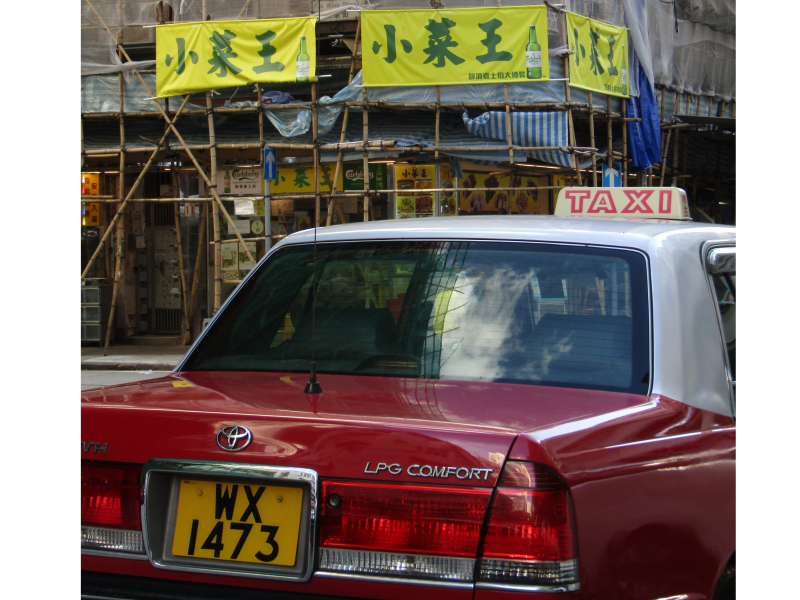
My scaffolding-encased building might be shabby, but it’s been getting the job done since 1963. I currently occupy a small studio on its seventh floor, and in the absence of a lift I like to positively reframe this dwelling choice as an investment in my physical health.
# Highlights in and around Kweilin Street
When you walk out of your place, what’s the first thing you see?
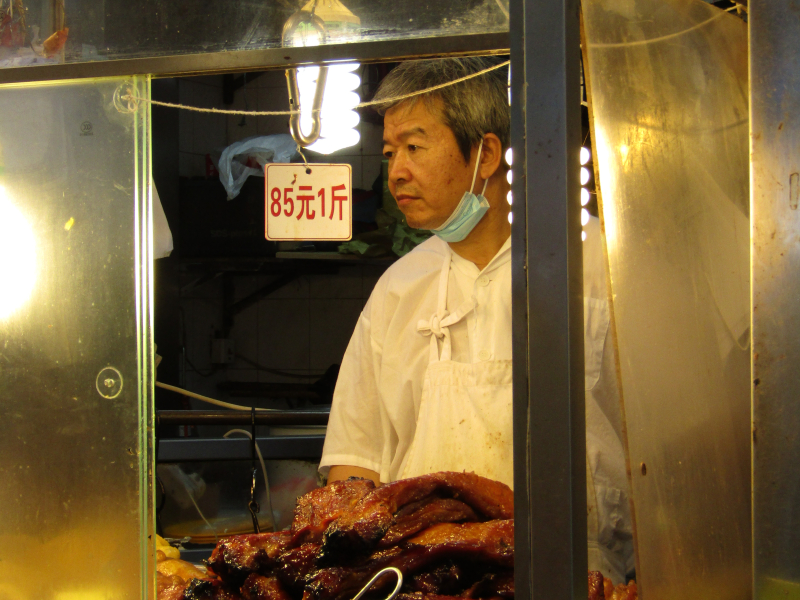
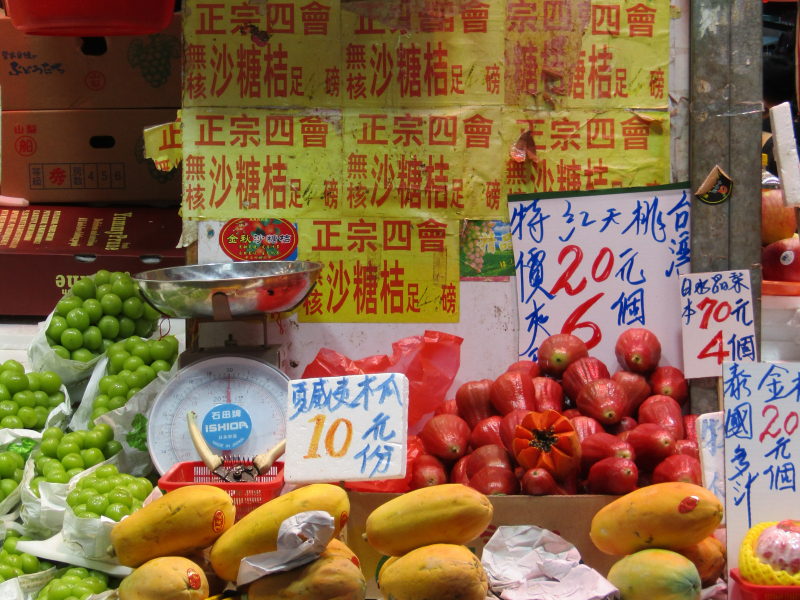
Apliu Street’s famous electric market is right on my doorstep, which makes it a hub of activity at any given time. Noisy, perhaps, but it’s hard not to appreciate that this is a place brimming with life.

What’s the closest store to your front door?
T Momo – it’s an outlet of cheap knick-knacks you never knew you needed, shrouded by constant queues. Though its blaring speakers are a significant source of noise pollution, T Momo undoubtedly matches the energy of the general area.
If Kweilin Street was chosen for a remake of a film, which would it be and why?
It could easily star in a Wong Kar-Wai remake; the vintage shop signs and old-school eateries already look like they’re bathed in a cinematic filter.
We’re sure your neighbours are great, but is there anything you wouldn’t mind a little less of?
I’d appreciate a little less stairwell rubbish. Once I’ve finally made it to the seventh floor, the familiar scenery of overflowing bins is especially unwelcome.
What’s the unofficial uniform of your street?
Apparently, no shirt at all. The regular old boys who occupy Exit C of Sham Shui Po Station can often be found bare-chested, despite the recent temperature drop. I admire their confidence, but I won’t be emulating their “uniform” anytime soon.
What’s the strangest thing you’ve ever seen in Sham Shui Po?
I’ve learnt to expect the unexpected from these immediate surroundings, but it has to be the nighttime flea market on Apliu Street. Just as the official street stalls close for the day, hordes of hustlers arrive to sell random goods on tarpaulin. From rusty cutlery to piles of (mysteriously acquired) phones, they’ve got it all. It almost feels like a gritty, real-life rendition of Night at the Museum.
# Things to do in the area
What are your three favourite places to eat or drink in the neighbourhood and why?
My favourite restaurant is easily Man Kee Cart Noodle. While the institution’s steaming, saucy vats of various animal parts are intimidating at first, you’ve got to trust the process. The resulting bowl of noodles will be truly magical.
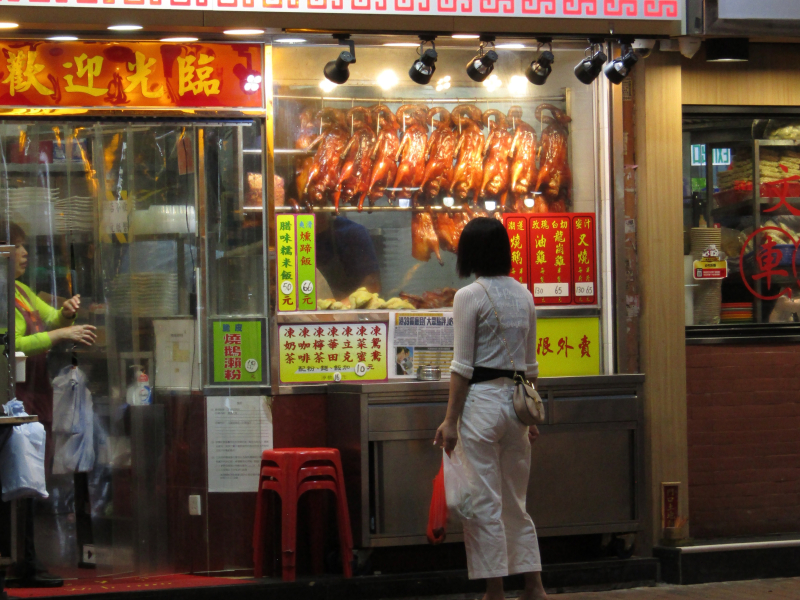
新蘇記燒豬大王 is another comfort restaurant for me. Its super-value roast meats deal before 5.30pm has me running out of school to make it in time. Not only are you guaranteed a full belly at a good price, but you’ll also be charmed by the lovely workers – a rarity in this efficiency-focused city.
Finally, Hop Yik Tai will always have a place in my heart. Its rice rolls are the silkiest and freshest I’ve ever had, which makes this institution’s temporary closure a significant grievance for Sham Shui Po residents and tourists alike.

What are the best places for shopping in the neighbourhood?
Forget Wellcome and Park n’ Shop – the area’s plentiful market stalls are the perfect place for cheap groceries. You’ll almost definitely get elbowed by a few old ladies trying to grab the best pick of produce before you, but that’s just part of the experience.
Ki Lung Street has several dollar stores for cheap utensils and homeware, while the electric market on Apliu Street is a tech nerd’s paradise. In my opinion, though, the most interesting shopping experiences come from ditching Google Maps, walking around and simply seeing what you find.
What are some fun or interesting things to do in Sham Shui Po?
Aside from the joys of shopping for fresh or used goods in the neighbourhood’s busy streets, a street food crawl is necessary to fully appreciate its charm. In particular, Fuk Wing Street never disappoints with its variety of steaming stalls and popular noodle shops. For the best results, bring cash, an empty stomach and an open mind.
What’s one thing you’d never change?
Sham Shui Po’s old eateries are one thing I’d never change. From Kwan Kee’s 75-year-old congee operation to Kung Wo’s longstanding supply of fresh bean curd, you can’t go wrong with their tried-and-tested recipes. In my opinion, such “no frills” dining experiences are where Hong Kong’s unique history shines through.
How about one thing you would change?
The slow walkers. Perhaps I’ve integrated a bit too well into Hong Kong’s efficiency culture, but I struggle to get through the bustling pavements after work without complaining.
If the city gave you a million dollars to soup up your street, how would you use it?
I’d invest in the reconstruction projects that have made scaffolding a lasting part of the skyline. Important as it is to preserve the area’s history, some of its crumbling buildings are definitely in need of some TLC.
# Things to do in Hong Kong
What are your favourite Hong Kong spots for taking out-of-town guests?
Australia Dairy Company is always my first stop on a Hong Kong tour. As well as serving up the richest scrambled eggs, tastiest milk tea and softest bread I’ve ever consumed, I think ADC provides a nice introduction to cha chaan teng culture. Sure, you might be bullied by the no-nonsense servers, but at least your tastebuds will be handsomely rewarded.

No trip to Hong Kong is complete without a stroll along Victoria Harbour and a go on the Star Ferry, but I like to introduce visitors to some of the further islands. Cheung Chau – with its fresh seafood and jumbo mochi – is a personal favourite, though Peng Chau’s peaceful beaches come close. These islands convey the dynamic appeal of Hong Kong, whose status as a metropolitan hub conceals its natural beauty.
When you’re in need of a dose of culture, where do you go?
Morning cart dim sum is my religion. Not only does it feel like a fun, rewarding game to compete with the Chinese aunties and uncles for the freshest items on the cart, but it’s also a dying art. With only ten such establishments left in the city, it’s important to participate in the treasure hunt of cart dim sum while you still can.
My favourites are Central Restaurant in Sham Shui Po (when I’m feeling lazy) and Lin Heung Lau in Sheung Wan.
If you’re missing home, what do you do?
A trip to Happy Valley Racecourse usually does the trick. With the smell of beer in the air and an abundance of suited gweilo, it’s the closest thing to the York Races on this side of the planet.
How to get your neighbourhood featured in EL
If you love your little corner of Hong Kong, share it with others! Just email us at info@expatliving.hk with “Street Talk” in the subject line. Include your name and street, and we’ll be in touch.
This article on living in a studio apartment in Hong Kong first appeared in Expat Living magazine Winter 2025 issue. You can buy the latest issue or an annual subscription or read the digital version free now.
Want your company to feature in this a story like this, or interested in knowing about other editorial options? Email us at advertising@expatliving.hk.