Discovering space and science
We chat with LORNE ALI, who runs Discovery Dome, a mobile planetarium that offers schools and students a space and science learning experience like no other in Hong Kong.
Back in 2010, Lorne and wife Rachel shared a passion for making science genuinely thrilling for students. And they realised that while standard classroom lessons and flat screens are great, nothing compares to the sheer magic of looking up at a starry night sky.
At the same time, it was clear to the pair that taking entire year groups on field trips to observatories could be a logistical headache for schools. That’s when they had their lightbulb moment: “Why not bring the Universe directly into the school hall?”
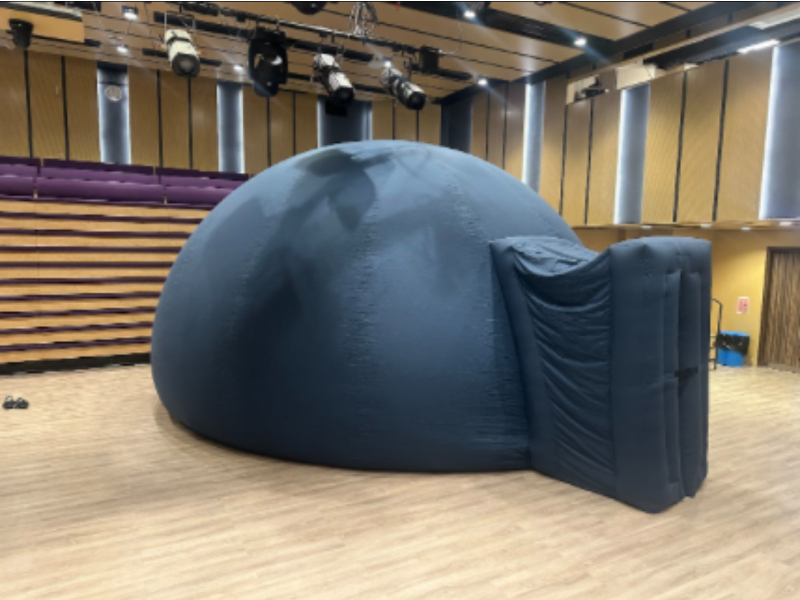
The aim from day one was to spark curiosity – to transform standard learning environments into “an immersive 360-degree cosmic observatory” where students don’t just read about space or science, they feel like they are floating right through it.
How have things developed since those very early days of Discovery Dome?
It has been an incredible 16-year journey. When we first launched, Rachel ran Discovery Dome while juggling her part-time job as a school science teacher. She did an amazing job laying the foundation over those first six years, but as demand from schools blew up, we realised we needed to expand.
I had been teaching at Kellett School for 15 years, and I decided to step out of the classroom to take over the daily operations full-time. Making that leap changed everything; it meant I could offer Discovery Dome visits every single day of the week, build out three different dome sizes to cater for all school layouts, and expand our popular after-school Astronomy Club programmes.
Today, our catalogue has grown far beyond just stars. We now cover everything from deep space travel to human biology and environmental science. I visit a huge number and variety of schools in Hong Kong and have also taken Discovery Dome into schools in Shenzhen. I’m always excited when I get invited into new schools!
Having a student walk out of the Discovery Dome and say, ‘I want to study space when I grow up!’ is the ultimate reward.
What are some ways you transform a standard school presentation into something more memorable?
Because I come from a teaching background, I treat every Discovery Dome session as a dynamic conversation rather than a lecture. I tailor the experience to align with curriculum units found in the PYP, MYP, IGCSE, British National Curriculum or the local curriculum, using the session as an exciting “provocation” to kick off a topic or a plenary at the end of a unit of investigation.
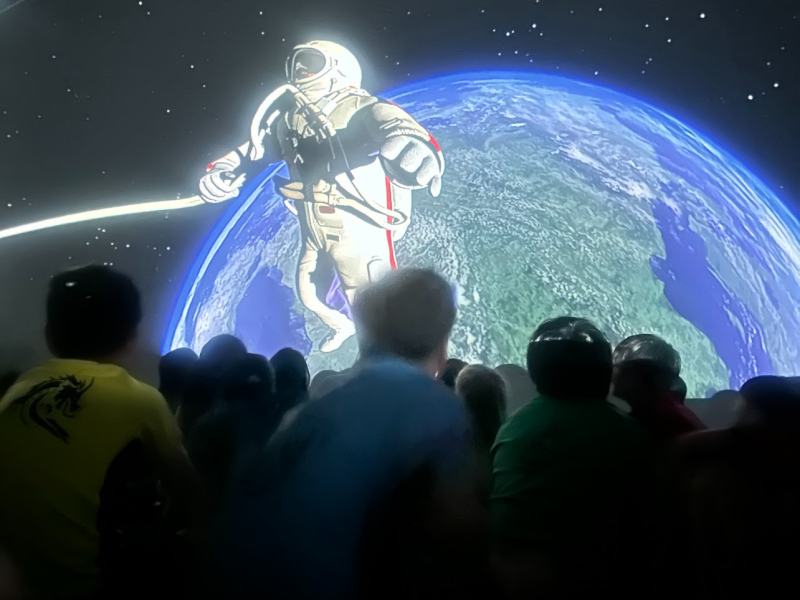
For our youngest learners in Reception and Early Years, I use storytelling shows like Ted’s Space Adventure to introduce big ideas like the solar system, planets and moons in a fun, digestible way.
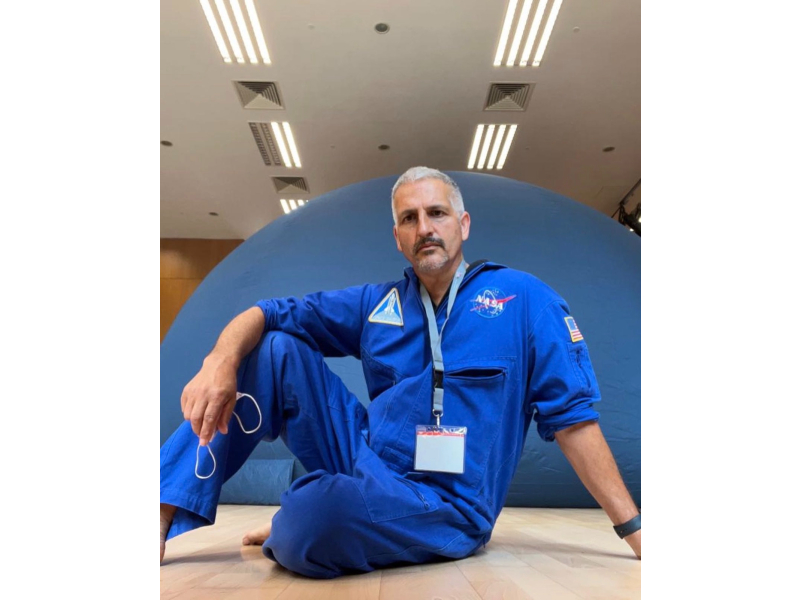
And yes, I occasionally put on a full astronaut suit to greet the kids! Seeing their eyes light up when an astronaut guides them into a dark, glowing dome makes the learning stick forever.
What are some advantages of teaching inside the dome?
The 360-degree “Fulldome” environment is a complete game-changer. The moment students step inside and the projection turns on, the outside world disappears. You get 100 percent focus because there are no distractions.
Visual and spatial learners absolutely thrive in this setup. Instead of looking at a diagram of a neuron or a planetary orbit, they are completely surrounded by it. Complex scientific concepts become intuitive because the students feel like active explorers inside the picture rather than passive observers.
Why do you feel it’s important for Discovery Dome to connect students to space-related science in 2026?
We are living through a brand-new golden era of space exploration. Closer to home, it’s particularly inspiring to talk about Lai Ka-ying, Hong Kong’s very first astronaut selected as a crew member for the Shenzhou 23 mission to the Tiangong space station; it shows local students that their dreams really can reach the stars.
Alongside NASA’s Artemis missions preparing to establish a permanent human presence on the Moon, and Elon Musk’s SpaceX Starship pushing the frontiers of deep space, space news is happening live in front of these kids every day.
We constantly update our content, so students aren’t just learning history, they are connecting with history as it happens. Shows like Mars: The Ultimate Voyage (which was created via a NASA TEAM II Award) dive into the real-world engineering, psychology and science needed for deep space travel. Showing students real-time space missions inspires them to realise that they could be the engineers, scientists and astronauts of tomorrow!
What’s a favourite milestone or moment that has stuck with you while doing your work?
One highlight was hosting three-time NASA Space Shuttle Commander Ken Cameron right inside Discovery Dome for a special event with Cathay Pacific. Sharing our dome with a veteran astronaut who has flown in space three times was completely surreal.
On a day-to-day level, my favourite moments are the spontaneous reactions from students. When the dome lights dim, the night sky opens above them, and you hear an entire room of children gasp in unison – that never gets old. Having a student walk out of the dome and say, “I want to study space when I grow up!” is the ultimate reward.
New Show: Mysteries of Your Brain
Lorne outlines some details of the newest Discovery Dome show for schools.
“We are super excited about our newest flagship presentation, Mysteries of Your Brain. It’s an immersive, animated adventure that takes students on a journey straight into the human brain alongside a young girl and her clever crow companion. Together, they zoom along paths of firing neurons, explore how human and animal brains differ, and discover how our brains make us who we are, showing kids that we all have the power to change and grow our minds. It was produced in collaboration with the Bell Museum, and the visuals inside the dome are breathtaking.
“It also highlights that we aren’t just an astronomy dome. Alongside brain biology, we offer shows like Dark, which explores the science of light and the real-world impact of light pollution, showing how versatile mobile planetariums can be across the whole science curriculum.”
Find out more at discoverydome.hk.
Our article on this mobile planetarium and cosmic observatory first appeared in the Autumn 2026 issue of Expat Living magazine. You can buy the latest mag or an annual subscription, or read the digital version for free now.