
In our last issue, DR QURATULAIN ZAIDI of MindNLife discussed relationship strategies for adults with ADHD; here, she looks at the challenges teenagers with the condition may face, approaches that can help, and practical advice for parenting teens with ADHD.

Attention Deficit Hyperactivity Disorder (ADHD) is a neurodevelopmental disorder affecting people of all ages, genders and backgrounds. It begins in childhood and often continues into adulthood – and it has many faces. Boys were once thought to be more commonly affected, as a phase they would “grow out of”; but we now have a much stronger understanding of how ADHD presents across genders and ages. And while rates vary depending on country and setting, studies suggest that around 11 percent of school-age children meet the criteria for an ADHD diagnosis.
How ADHD presents at school and home
Parents and teachers often describe a child with ADHD as “inattentive” – someone who won’t start a task, forgets instructions, talks back or disrupts the classroom. But ADHD is not simply a behavioural issue; in my opinion, it’s more accurately described as a disorder affecting executive functioning: the brain-based skills we use to plan, prioritise, complete tasks, manage time, sustain effort and regulate impulses.
ADHD is interest-based. A child may struggle to engage with something that is important but unstimulating, while becoming intensely focused on something new or interesting. This can lead to a label of “lazy” or “inconsistent”, when they’re actually struggling to regulate their attention and effort.
At home, this can look like losing things, forgetting instructions, failing to follow through and emotional volatility. At school, a student might be frequently distracted or distract others, leave assignments until the last minute or miss key information. Some may become the “class clown” to manage boredom, anxiety or social pressure.
I’m yet to meet one person with ADHD who is the same as another. While diagnosis can be useful, the lived experience is always nuanced. It’s shaped by each individual’s temperament, learning style, sleep, stress, family support, co-occurring anxiety or depression, school expectations and the online world. This is why, in my experience, “one-size-fits-all” advice rarely works.
The teenage years and ADHD
Adolescence is challenging for everyone, but it can be particularly difficult for young people with ADHD. The transition from primary to secondary school brings greater organisational demands: students have to switch from class to class, keep track of teachers and subjects and manage homework. They’re increasingly expected to be able to organise and manage themselves to prepare for college, university or employment in a few years.
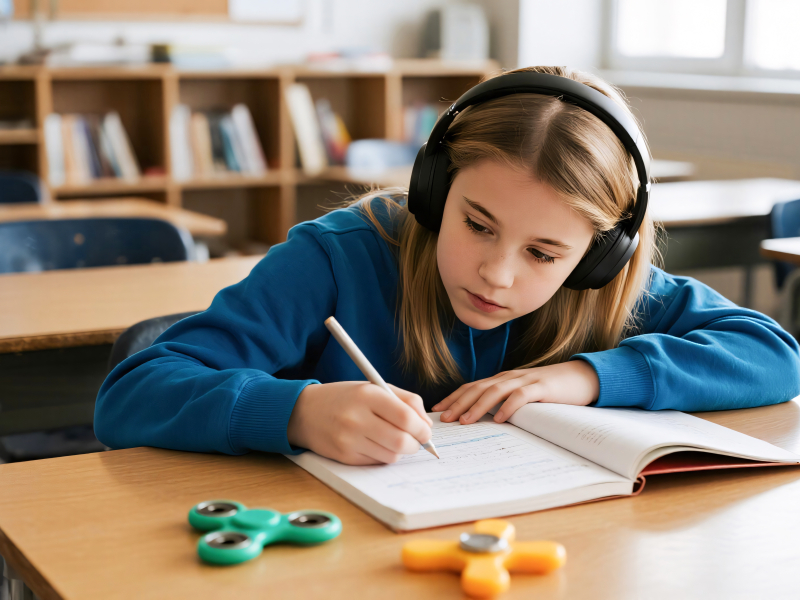
Research shows that teens with ADHD face an increased risk of lower academic performance and social difficulties, including peer problems and teacher conflicts. A common issue I hear is failing to submit work that has actually been completed, simply because the student forgot to hand it in. Many have “chaotic” school bags and lockers. Notes and important papers are easily lost.
In my experience, ADHD symptoms are not static: they change, especially when sleep deteriorates, stress rises, exams loom or social life becomes more intense. This is not a failure; it’s a cue that support may need to be adjusted.
Key challenges for teens with ADHD
Social functioning
We know that the importance of peer relationships increases during adolescence; this time is even harder for teenagers today, because they go through both a real-life and an online adolescence. Lack of practice with social skills in the early years can make it hard for teens to maintain close friendships. This is evident from the post-COVID period, and the impact on development that social isolation had on a whole generation of children.
Rejection sensitivity and emotional reactivity
Many teenagers with ADHD experience intense distress following perceived criticism, teasing, exclusion or rejection. Families may see these reactions as overthe-top, but they can reflect genuine difficulties regulating emotions in the moment.
For family members, this may appear as volatility or an emotional explosion. For peers, it may take the form of impulsive messages, abruptly ending a friendship or withdrawing altogether. What looks like “I don’t care” may actually mean “I care too much and I don’t want to lose you.”
Academics
I often see teens with ADHD who struggle with planning and organising, focused studying, taking notes, starting tasks, prioritising and, particularly, procrastination.
Professional support can be valuable in managing ADHD, while schools can play an important role by helping teachers understand the student’s challenges. Regular communication between families, professionals and schools can help monitor progress and adjust support.
Classroom accommodations can also be beneficial. Depending on the student’s needs, these can include extra time for homework or assessments, preferential seating, oral and written instructions, and additional support after school.
Emotional functioning and resilience
Over many years, I have found that teenagers in general, and especially those with ADHD, tend to avoid uncomfortable experiences or give up when something becomes difficult. As parents, if we give in to this too often, we deprive our children of opportunities to develop resilience.
Not everything in life or learning is exciting. It’s okay to be bored; and sticking with seemingly boring tasks is good practice for life. Teens with ADHD find repetitive tasks particularly frustrating because of the condition’s interest-based nature; that’s why teaching the value of finishing things is so important. Teens with ADHD can also feel less capable than their peers, which is why I always encourage parents to provide as many opportunities as they can in areas where their child feels confident and successful.
Resilience – being able to adapt to new circumstances and bounce back from adversity – is another essential life skill. Developing “grit”, a tolerance for discomfort and the ability to delay gratification can be difficult for any teenager, but it’s even harder for teens with ADHD.
Screens and social media
Teenagers with ADHD may be particularly vulnerable to compulsive screen use. Social media platforms are built around novelty, fast rewards and algorithms designed to keep you scrolling for hours, which can make it especially difficult for an ADHD brain to disengage.
Research is increasingly exploring the link between ADHD and heavy social-media use. In my experience, this can become a feedback loop: ADHD traits increase vulnerability to overuse, while overuse can worsen sleep, attention, mood and everyday functioning.
What parents can do
A key shift is understanding that knowing what to do is not necessarily the same as being able to do it consistently. Research and my clinic experience both suggest that ADHD can affect task initiation and persistence, particularly when a task is boring, emotionally difficult or has a delayed reward. That’s why practical tools often help more than repeated reminders.
Parents can help by providing opportunities for positive peer interaction, such as team sports and group activities – environments where teens can practise listening, following instructions, cooperating and participating as a team member.
Rather than relying solely on total bans on devices or social media, which can sometimes backfire socially, families may benefit from structured and consistent limits. Parents should also model healthy technology habits themselves.
It’s also important to protect sleep. Devices should ideally be kept out of bedrooms at night, with a realistic wind-down routine established before bedtime.
Above all, keep communication open. Teenagers with ADHD need guidance, structure and support, but they also need understanding and supportive relationships at home. When parents recognise that challenging behaviour may reflect difficulties with executive functioning rather than laziness or a lack of effort, they can respond more effectively.
While it can bring challenges, an ADHD brain can also be a gift – it can offer strengths and a different way of experiencing the world. So, nurture and support your teen so that they too feel that it’s a gift they have.
Dr Zaidi is a British-registered clinical psychologist who wor˞ks with individuals, couples and families in her private practice in Central, and as a mental health consultant for a number of NGOs and international corporations.
+852 9700 2786 | +44 7918 092865
[email protected] | mindnlife.com
This article first appeared in the Autumn 2026 issue of Expat Living magazine. You can buy the latest mag or an annual subscription, or read the digital version for free now.