
Asia has become one of the most important financial hubs in the world. In May 2026, a Reuters report mentioned that Hong Kong had surpassed Switzerland as the world’s top cross-border wealth hub as investors are trusting Asia’s boom ahead of Europe’s safe haven. With many cross-border investors flocking to Asia, there’s a rising curiosity about how to track real-time data across leading financial hubs in Asia.
This article discusses this and the challenges faced by investors who spread their wealth across international borders into Asia.
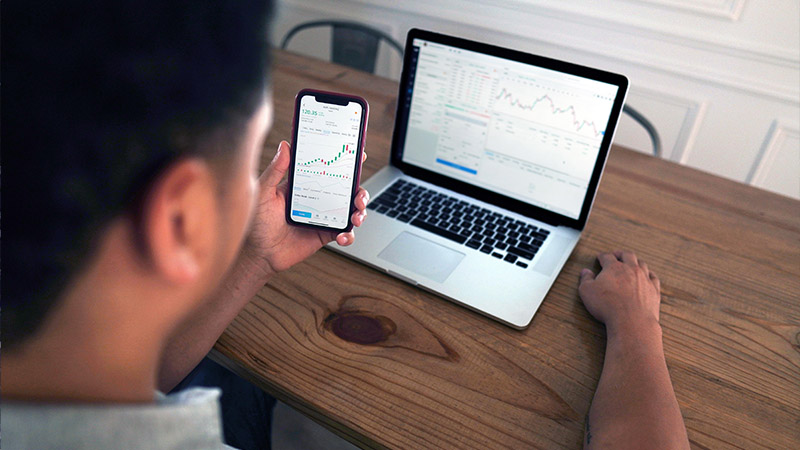
What are the challenges of monitoring multiple financial hubs in Asia?
It’s difficult to ignore the recent growth of Asian financial hubs. According to the Organization for Economic Co-operation and Development (OECD), the Asian market represents about 31% of the global GDP. The region also accounts for over 55% of all listed companies in the world in 2025.
Along with other Asian cities, Singapore has continued to strengthen its place as a top global space for wealth management and a fintech hub. Hong Kong, meanwhile, has remained an important connection between international capital sources and mainland China, and in 2025 it amassed about $2.95 trillion in offshore investments. Tokyo is still home to one of the world’s largest stock markets, and the Shanghai market is China’s financial bragging right to the world.
Even with these encouraging metrics, however, offshore investing in these markets comes with some challenges. Let’s discuss a few of them.
They operate in different trading hours: The trading markets are spread across different time zones. Some of these trading hours overlap but many don’t. The task of monitoring markets can become unbearable without centralised monitoring boards that consolidate everything in one place.
Currency exposure: Despite assets performing well, investors might not make an overall profit if exchange-rate movements go against the investment. This is particularly true if your portfolio is denominated by Singapore dollars (SGD), Hong Kong dollars (HKD), Japanese yen (JPY), Chinese yuan (CNY) and the US dollars (USD).
Information overload: There’s so much to analyse – and real-time access to overwhelming volumes of information doesn’t help matters. Without tools to help you filter information properly and create visualisations, you can easily miss important signals.
How investors track real-time data across Asia’s biggest financial hubs
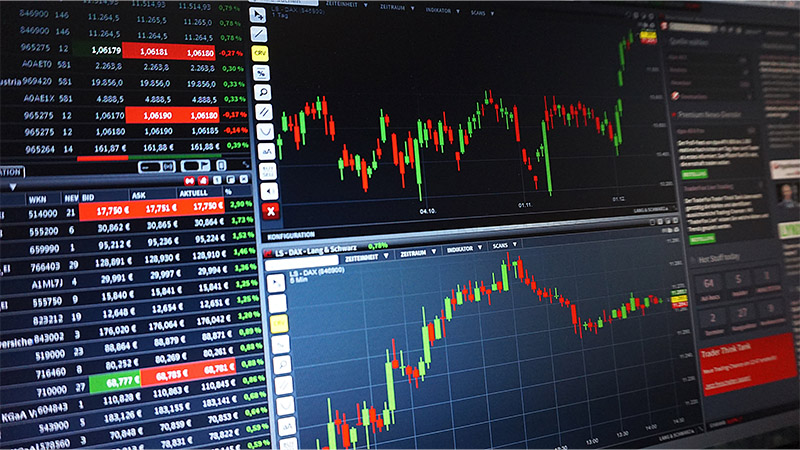
Here are the tools and strategies used by cross-border investors to track real-time data.
# Unified market analysis platforms
This type of platform is one of the most effective ways to monitor what the market is saying across Asia’s financial hubs. It literally saves investors the effort taken to log in to different brokerage accounts to check price changes. With modern charting platforms, you can follow aggregated data feeds from different exchanges on a single dashboard.
This is one reason why TradingView Singapore has become a favourite among cross-border investors. Like a few similar unified charting platforms, TradingView helps investors monitor multiple markets at once. For example, from only one tab in your browser, you can track the positions of the Nikkei 25, the Hang Seng Index and others at the same time.
Another beauty of these platforms is that they can overlay analysis of moving averages and volume profiles so that you can compare the relative strength of one Asian market against the other.
# Following data from live exchanges
Studying data feeds directly from major Asian exchanges gives investors access to firsthand information about trades happening in the region. Some of the popular exchanges include the Singapore Exchange (SGX), Hong Kong Exchange and Clearing (HKEX), Tokyo Stock Exchange (TSE), Shanghai Stock Exchange (SSE) and Shenzhen Stock Exchange (SZSE).
Studying these exchanges gives you direct market access to real-time price updates, which have latencies tracked in milliseconds. They also help you monitor other metrics like bid-ask spreads, market depth, corporate announcements and market depth.
# Economic calendars and macroeconomic publications
It’s one thing to learn about price data, but understanding the news context behind the numbers is always more important. For many cross-border investors, embedding live news feeds and calendars relating to economic developments into their charting space is a winning strategy. When investors set these up, you might find headlines from a country’s central bank on their interest rate policy beside their currency’s composite index chart.
Speaking of releases and publications, some of the most significant groups of releases that have major effects on markets in the region include:
- Reports on inflation
- Publications on GDP growth
- Employment statistics
- Manufacturing index releases
- Interest rate decisions by central banks
- Trade balance reports
With integrated platforms like TradingView Singapore, you can see the news when it drops and its immediate effect on prices. This saves you the stress of trying to distinguish between genuine trends and one-minute headline spikes. As a cross-border investor, this also helps you prepare for volatility or any significant market event before they happen.
# Studying overlapping sessions

It can wear you out easily if you try to monitor Asian markets by the hour. This is because sessions do not overlap neatly. For example, the Tokyo session opens first before others. After Tokyo, Singapore and Hong Kong open next, then Jakarta follows suit. As an investor, you would want to see how earlier sessions set the stage for subsequent sessions.
The most feasible way to do this is to use charts that allow for multi-timeframe analysis. If you’re using a multi-timeframe analysis tool, you can choose to study a one-hour chart of an index, and then a four-hour or a daily chart. This can help you to learn about the structural levels of the market throughout the week in different markets.
# Setups that notify market changes
Thanks to advances in technology, some cross-border investors now receive market change alerts on their devices. So, instead of continuously monitoring charts throughout the day, they only wait for notifications. These notifications are sent when market conditions meet criteria already set by the investor. Usually, they include updates from security regulators and central banks, information from financial media organisations and government agencies, and publications from investor relations departments. To get rid of unwanted fluff from the news, you can use news aggregation services to filter and organise information that really matters to your portfolio’s exposure and your investment interests.
Final thoughts
Tools like TradingView Singapore help you manage this responsibility by providing access to advanced charting systems, live exchange feeds, calendars and artificial intelligence analysis. With these, investors can make trading decisions backed by real data. If you want to manage risk better and take advantage of emerging opportunities in Asia’s financial hubs, you can use any or a combination of the tracking methods written about in this article.
Enjoyed reading this article on market analysis platforms for cross-border investing in leading Asian financial hubs? Read more on expatliving.net